
Entanglement: How American Bombs in Iran Reached Oklahoma’s Gas Stations
Oil. One of the world’s most critical resources. Oil produces gasoline, diesel, jet fuel, plastic, nylon, asphalt, and so much more. The world consumes roughly 37.5 billion barrels of oil per year. This oil market has become so globalized that all oil is priced on the global market and not priced based upon local cost or conditions. This is why Oklahomans are paying $4.15 per gallon of gasoline and $6.00 per gallon of diesel despite refineries right here in the Sooner State. For context, diesel was $3.27/gallon in September 2025. It has nearly doubled, and the reason is simple. Because the United States chose to attack a sovereign nation without congressional authorization, we Americans are paying the price for an unconstitutional war.
The Global Oil Market
As we have discovered all too well this year, the price of oil fluctuates—sometimes wildly—and this creates risk for both oil refineries and for oil companies. Events in Russia, Iran, Saudi Arabia, or the United States can have major impacts upon the global price and supply of oil. Here’s why: oil is a highly fungible commodity. This means that a barrel of light crude produced in Oklahoma is effectively the same as a barrel of light crude produced in Russia or Saudi Arabia, and those barrels can all go into a refinery and come out as gasoline. Tankers carry crude from wherever it is produced to whichever refinery will buy it, anywhere in the world.
This interconnected supply line is the reason a barrel of oil from Cushing, Oklahoma sells for roughly the same price as a barrel in Rotterdam, once we account for shipping. When a fifth of the world’s oil supply stops moving to refineries and customers around the world, the same number of buyers begin to bid on fewer barrels of oil, and U.S. oil is impacted by that reality.
On the home front, U.S. crude oil production reached a new high in 2025 at roughly 13.6 million barrels of crude oil produced per day. Most of this production is concentrated in the Permian Basin, which spans parts of Texas and New Mexico. Of the 13.6 million barrels produced per day, the United States exported an average of four million barrels per day. These exports tie U.S. oil to the global market. Because our markets are so deeply interconnected and intertwined, dropping bombs in Iran drove up the price of oil across the globe, including the United States.
Global Supply Disruptions
Prior to the U.S.-initiated conflict in Iran, roughly 20 million barrels of oil passed through the Strait of Hormuz each day, representing nearly 25% of all maritime oil shipping. When the United States attacked Iran on February 28th, Iran immediately responded by shutting down the Strait. Here is a map showing the Strait of Hormuz:
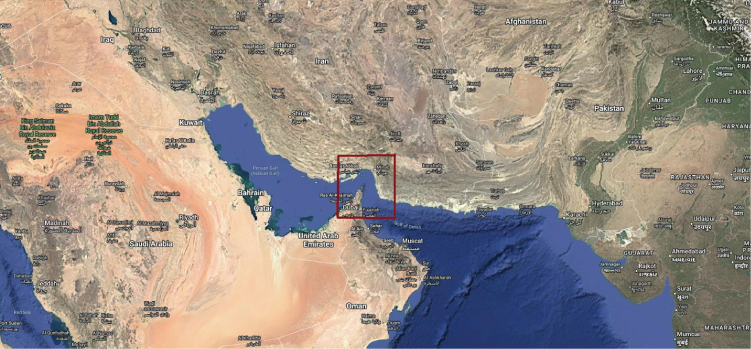
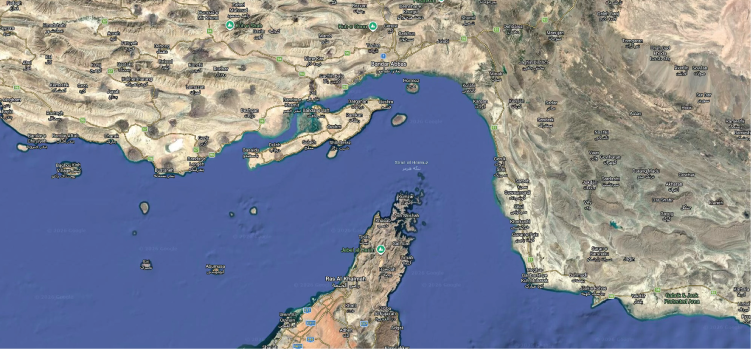
The Strait of Hormuz runs between Oman to the south and Iran to the north. The Strait is used to transit between the Persian Gulf and the Gulf of Oman, with access then to the Arabian Sea and beyond. The Persian Gulf is bordered by Oman, the United Arab Emirates, Qatar, Kuwait, Saudi Arabia, Iran, Bahrain, and Iraq. At its narrowest point, the Strait is just 21 nautical miles wide, and the navigable shipping lanes are only two miles wide in each direction. This is why it was so easy for Iran to close the Strait, and why they have been so successful at keeping it closed.
The Strait of Hormuz is not the only option for shipping crude oil. Oil transiting between the Middle East and Europe also passes through the Bab el-Mandeb Strait at the southern mouth of the Red Sea.
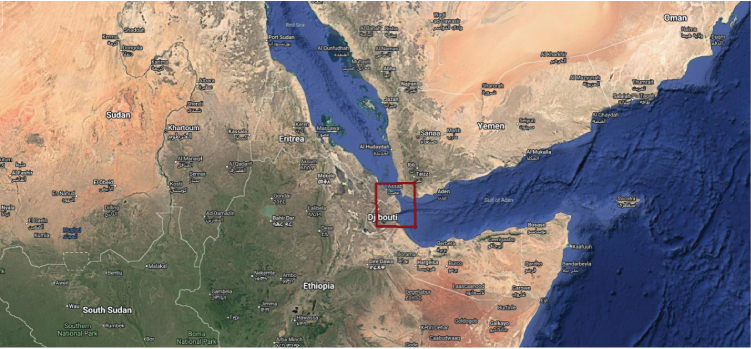
Prior to the conflict in Iran, Iran-backed Houthi rebels had already begun to shut down shipping through the Bab el-Mandeb. For example, oil shipments through this Strait were roughly 8.7 million barrels per day in 2023, and that dropped to roughly 4 million barrels per day in 2024. This chokes two critical shipping passages for global oil.
With much planning and foresight, Saudi Arabia built the “East-West Pipeline” to alleviate these exact problems. The pipeline runs 745 miles and can normally carry five million barrels of oil per day and avoid the Strait of Hormuz entirely. Alas, drones launched from Iraq recently damaged the pipeline, and it is currently offline, further compounding both the importance of the Strait and its impact on global oil prices. With the shuttering of the pipeline, there are very few viable alternatives to the Strait of Hormuz at this time.
Prior to this conflict, there were three roads out of town. Two of them are blocked, and somebody hit the detour. Options are running out.
Where the Money Goes
Refiners sit right in the middle of all this. They buy crude oil, refine it into gasoline and diesel, and sell the fuel. The gap between what they pay for the crude and what they collect for the finished fuel is called the crack spread, and it works out to their gross margin. In a normal year, that gap stays fairly steady. This year it has not. The price of diesel has pulled away from the price of crude, which is how diesel in Oklahoma went from $3.27 a gallon last September to $6.00 today.
These increased margins don’t exist because anyone in Oklahoma got greedy. They exist because the war cut off supply, and every refinery in the world is selling into a shortage. The bill is paid by those who burn diesel for a living: trucking companies shipping goods down I-35, I-40, and I-44, the farmer who runs a combine at harvest, and every Oklahoma business that pays to ship anything by truck. Those costs are then passed on to hard-working Oklahomans in the form of higher prices.
Conclusion
Congress did not authorize this war in Iran. Article I of the United States Constitution grants Congress, not the President, the authority to declare war. No such vote has been taken at this time. That makes this an unconstitutional war, and Tom Cole himself voted six times in 2026 to allow this conflict to continue, despite the full House of Representatives twice passing a resolution to end the war.
Oklahomans are paying for that choice every time they fill up. A vote to end this war is a vote to reopen the supply lines that decide what diesel costs in Lawton and what gas costs in Norman. I'm asking for that vote. On November 3, hire me to represent this district in Washington, and I'll cast it.
___
U.S. Crude Oil Production Rose in 2025, Setting New Record, U.S. Energy Information Administration, https://www.eia.gov/todayinenergy/detail.php?id=67404.Annual U.S. Crude Oil Exports Decreased for First Time Since 2021, U.S. Energy Information Administration, https://www.eia.gov/todayinenergy/detail.php?id=67404.